Marquee Text
A A A

Friday, August 20, 2010

Rita Atria - A victim of the Mafia


Category:


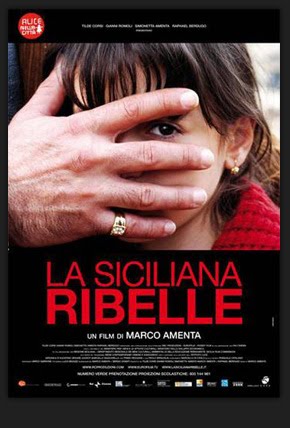
The Sicilian Girl


In this post (after many months of silence... sigh) I'll be talking about a real story that happened in Sicily many years after I left. And unfortunately, I came to find out about it after casually watching a movie. At first, I didn't realized that this story was based on real events, and also that this movie made me realize how much I didn't know about Sicily since I left it.

In this movie (The Sicilian Girl - La siciliana ribelle) is depicted the true story of a Sicilian girl who lived her very short life in a very close family/mafia environment.


The name of that young girl was Rita Atria


Rita Adria lived in a famiglia intisa (well respected family) in Partanna a small town in the province of Trapani. At the age of eleven years old her father - don Vito Adria known as the, "paciere" (pacifier) a man from the old Mafia style - was killed by the men of rival Mafia gangs, because of a regional power struggles occurring in between the 1987 and 1991 (a Mafia war for the Mafioso dominion of the Belice valley which left dead on those streets dozens of people).


The Belice valley

Don Vito got killed two days after the wedding of his only son Nicola with a woman by the name of Piera Aiello. Nicola (a Mafioso himself) after the violent death of his father (don Vito) decides to take revenge on his father's killers, but six years later on June 24, 1991 he too got killed by two men that entered his home with a double barrelled, sawn-off shotgun (the Sicilian classic Lupara).

He dies not before her sister Rita, collects the most intimate confidenze on the transactions and dynamics of the Partanna's Mafia clans on her personal diaries. Her sister-in-law (Piera Aiello) after the death of her husband Nicole came with the decision to collaborate with the Italian justice and her deposition caused the arrest of many Partanna's Mafiosi. She can't longer tolerate, "i silenzi omertosi" - (is an Italian term for the Mafia’s code of silence) of an entire town and then she too became like her sister-in-law a, "testimone di giustizzia" - (witness of justice).

I like to stress that Rita Adria like her sister-in-law Piera weren't, "pentite di mafia" because they have not committed any crime to regret. I prefer to refer to them in this post as, "testimoni di giustizia".

In fact, many people in Italy still confuse the, "testimoni di giustizzia" - (witnesses of justice) with the, "pentiti di Mafia" - (informants of Mafia): The, "testimoni di giustizzia" are people who have never committed any crime and that decide to spontaneously collaborate with the Italian justice system. In the other hand the, "pentiti di Mafia" are former Mafia clan's members who have committed crimes of any sort that at some point decided to turn against their criminal organization for various reasons.

The Sicilian Girl - La Siciliana Ribelle


A picciridda (the little one - that's was the way don Vito Atria was used to call his little daughter Rita) at the age of seventeen she decides too, to take revenge for the deaths of her father and brother by talking to the Italian magistrates the same way her sister-in-law Piera did. On November 5, 1991 she got out from her home to go to the school... instead, she went straight to the office of Paolo Borsellino, (back then procurator of Marsala) to turn over to Borsellino her testimony and precious diaries in order to denounce many local mafiosi.

Of course (like her sister-in-law's decision), after her move many more ended up in handcuffs. Now everyone in Rita's town hates her too, even her own mother doesn't want to know about a daughter that speaks with the sbirri (minions of the Italian state - italian cops), anymore. Meanwhile Borsellino worried for the fate of the, "picciridda" tells her to take an Italian map and cut the Sicilian island out of the map and throw it away for good, "you must forget Sicily!". Afterward, he puts Adria under a witness protection program and moved her to a new secret location in Rome.

One thing for sure, slowly during the all of Rita's hard deal, her obsession of revenge for her loved ones turns into a lonely quest for justice.


The Mafia it's us, with our wrong ways to think and behave


During the last months she lived in Rome the only figure she could really count on was the judge Paolo Borsellino. Indeed, she saw in him a sort of protective father figure. In her diaries she wrote a lot about him. Even the Sicilian judge considered her more like a daughter than a witness, especially, because he had already a real daughter the same age as Adria.

In 1992, Borsellino was killed by a car bomb in Via D'Amelio, Palermo, less than two months after the death of his good friend Giovanni Falcone.


Paolo Borsellino

Rita learns the bad news from the television. And now, without the fatherly figure of a Borsellino ready to shield her from anyone and everyone, for sure she must have felt like the only world she has ever known was gradually shattering into very small pieces under her own feet.

A week later (it's the 26 July, 1992) after the Mafia's massacre of Via d' Amelio, in an apartment of Rome probably alone and in a mental fragility, Rita approaches a window and jumps it. Her poor body will be found on the pavement under that window of the penultimate floor in via D'Amelio. She was only 17 years old.


Rita Atria (Partanna, 4 September 1974 – Rome, 26 July 1992)

Some time after the funeral, Rita's mother went to the cemetery with an hammer in her hand to break her daughter burial stone without mercy. That's the real Mafia! A lethal cancer capable to destroy even special rapports between mothers and daughters.Signature


Pointer

Saturday, November 21, 2009

Why the Mafia can't be defeated in Sicily? (part 2)

Category:


Removing those misfit kids from the Mafia's claws before they'll become adults and from there callous criminals, shouldn't be that hard to do it. By simply giving some possibilities for better futures to them and their parents, these kids will become productive and responsible adults to a modern society. Of course all this will be only possible if, the Italian national institutions will set a policy from preventing those kids in becoming the next, "Mafiosi".


From what I could see, there were two main culprits to be called in cause: the first culprit as I said is, the Italian State not doing much (besides the detecting/policing, prosecution and jailing works on affiliated of the Mafia) on the prevention. I don't believe in the effectiveness of a zero tolerance policy the same ways it was applied (more likely it was imposed) on the New Jersey and New York's populations, for safer and cleaner neighborhoods! That kind of policy isn't going to work in the Sicilian Society, but only steer social unrest.

Giving jobs to those low income family living in run-down neighborhoods is, of course, a first line to fight criminality perpetrated by minors. Those same neighborhoods should be cared more from the Italian government, to prevent the Mafia of using them as a reservoir to resupply its troops. Moreover, new resources should be spent in those neighborhoods, like social workers taking care of low ambient families by helping them arise to high standards of living. Those same social workers should in the same time, enforce the kids' parents to send their children to attend schools and do follow up their progress during their growing up.


Police patrolling on foot those streets should be a norm, especially in very difficult neighborhoods, to prevent the criminality of infiltrating them. Parks should also be created in those neighborhoods, to give to the people that are living in them a sense of communities. As well, garbages should be collected regularly, streets, schools and any other social infrastructures should be well maintained in those same neighborhoods, to not give a false impression to those people that the Italian national government doesn't really care much about them.

The second culprit is: in the Sicilian culture there are many things that should be thrown out! In the Sicilian culture is indeed occulted, a certain mentality of mafiositi. For example: in Sicilian dialect there are some words like mafiosetto/mafiosetta (youngsters, acting in mafioso's ways) not seen and used in derogatory terms by a part of the Sicilian population but as some form of rewarding badges for an ill-mannered youngster. People looking to circumnavigate (as I mentioned in a previous post, see: Fighting the Mafia-Incorrect conceptions and bad attitudes from the Sicilians people) the normal difficulties of the day to day life, by applying unorthodox methods to beat the system by form of cheats such as l'arte di arranggiarsi (the art of getting by) by asking favors to the wrong people.


They see politicians stealing and cheating on regular basis, or when seeing the employers not paying the taxes or not paying themselves the appropriate salaries. An other of unethical behaviors is when they are seeing someone to pay the, "bustarella" (little envelopes containing cash which is used to bribe someone in getting in return a big favor). Unfortunately, to a portion of the Sicilian population such occurrences are seen as a normalcies, and when they can they'll apply the same methods.

All the above statements are not helping much in fighting the Mafia at the present time, but helping the Mafia in its own survival. Until the culprits which I have mentioned in this current post are not defeated, the Mafia too won't be defeated! I must point out that in the Sicilian past somehow, must have been an hidden agenda from some political puppeteers which were acting in the shadows to keep the Sicilian's status-quo unchanged for personal gains.

"The Mafia is oppression, arrogance, greed, self-enrichment, power and hegemony above and against all others. It is not an abstract concept, or a state of mind, or a literary term... It is a criminal organization regulated by unwritten but iron and inexorable rules... The myth of a courageous and generous 'man of honor' must be destroyed, because a mafioso is just the opposite."


-- Cesare Terranova, Italian Magistrate murdered in 1979


Nowadays things are looking a bit different for Sicily and maybe, maybe, there is finally some hopes for the honest, working Sicilian families.
Signature


Pointer

Thursday, November 19, 2009

Why the Mafia can't be defeated in Sicily? (part 1)

Category:


The Sopranos


The Mafia is a sort of ghost, invisible to anyone visiting Sicily unless he does know how to look for it, for all other residents it's all an other matter... First, it's the kind of Mafia you won't find on American movies but the kind of Mafia you'll find in Sicily has nothing appealing. Those American movies based on the glamorous American Mafia are contrasting sharply with the reality of the Sicilian Mafia. The Sicilian Mafia is a revolting, treacherous, deceitful, viscid, threatening world that like a leech sustains itself by bloodsucking vital lymph from the sane tissues of the Sicilian society.


Why the Mafia can't be defeated in Sicily?


That's the one million dollar question which I wish, I could answer it! I'll take my years I lived in Sicily as an example while I'm trying to give an answer to this Sicilian eternal dilemma.

I remember from the experience that I had acquired while I was living in Palermo, that there was a stratified society similar to many other societies you'll find around the globe: there were the wealthy of an upper class, the middle-income people (as might be expected) from the middle-class, and last a lower class made up of the underprivileged such as: the poor, the helpless, the illiterates, the miserables, the misfortunate people, along with all the other kind of inadequates from a society (note: this last class sometimes has been rejected by the the rest of the upper-classes, but it has also been totally neglected by a failing Italian system for a very long time).


***

Now, from this lower class is where most of the times the Mafia refuels its ranks.


The people of this class, usually lives in unacceptable conditions inside run-down neighborhoods where crime is the norm, and where the kids of this lower class hardly get to finish the primary schools so that they can manage to speak a decent and acceptable Italian language. Those kids are usually been neglected by their own fathers (ordinarily these fathers are men with stone aged mentalities) and are spending the rest of their days hanging around the streets by doing nothing or almost nothing!


That nothingness is where takes those kids in looking toward detrimental activities. First of all, they start their petty crimes activities with broken-windows, small burglaries, doing small favors of doubtful nature to the next neighborhood's thug (like delivering packages of drugs, or delivering dubious messages to the local bosses, etc and etc...)


And soon, very soon escalating these activities with their first, "scippo". Scippo? What is this thing called scippo, you may ask! Ask a tourist that went to Sicily for a vacation, and maybe, he can answer you. The, "scippo" may sound like a beverage's name but it isn't. It's a violent motorcycle theft, and it is caused by the grabbing of an incautious's property with a violent pull by one or two kids while they are riding fast their motorcycle.


Consequentially to that violent pull, the poor tourist is left on the street floor badly bruised and sometimes even with broken bones (this form of stealing it is most of the times, practiced on unaware tourists and rarely on the locals because the locals know where to find them or to who to talk to get the stolen property returned). As soon these kids grown up and the local family Mafia have noticed them, they will be engaged in their ranks as, "picciotti" (literally it means youngsters but in the Sicilian culture it was also used for soldiers) to do their dirty jobs.

Mafia is an invisible and invincible force incapable of been defeated by traditional policing methods!

I believe we should still have a long time to confront ourselves with the organized crime of mafia origin. For a long time, not for the eternity: because the Mafia is a human phenomenon and like all the human phenomenons it has an its beginning, an its evolution and it will also have an its end.


Giovanni Falcone (assassinated Italian judge)

Now my next question is: why this malicious cycle can't be broken by removing the running water from the watermill?

Next: Why the Mafia can't be defeated in Sicily? (part 2)
Signature


Pointer

Sunday, November 8, 2009

The years of the MAfiA's reign in Palermo.

Category:


Before the carnages of the anti-mafia judges Giovanni Falcone and Paolo Borsellino in 1992, and before the carnage of Gen. Carlo Alberto Dalla Chiesa in 1982, and even before many other carnages that happened over there, there was a time in which Palermo was living in an apparent state of optimism while the Mafia was having very good times!

Those were the years of when the Sicilian's Mafia families were dictating their laws, the years where legality and national institutions were partially active in Sicily, the years of the Mafia's illegal building constructions, rampant misappropriations, and corrupted mayors.


The years of Palermo's sack.

Thanks to the Mafia, there was for Palermo a partial era of economic boom (the only one I could ever recall from the years of my growing up in Palermo). All over the city of Palermo there was a frenetic activity of constructions. Construction buildings were springing up all over the city, like they were malefic mushrooms. I remember those years as the, "Sack of Palermo".


I still have in my memories of a much smaller Palermo than it's today. From up above the mountains that are surrounding it, you could have had an astounding panoramic view. Palermo looked like was made of gold because of all its lemon's trees cultivations, and for that specific reason Palermo's valley was named, "La Conca D'oro" (the golden valley). From where I lived, my father to get in the city's center for work, he had only one small street available to reach his destination. Along this single street there was nothing but trees, interminable lines of lemon's trees and a few old buildings scattered all over.

La Conca d’Oro - (golden valley)
Oil painting of, "Francesco Lo Jacono' (1838-1915)

In a very short time everything was destroyed and replaced by a process of savage urbanization, even thanks to little controls from the competent authorities. I remember, a few of those Liberty stile Villas at the corner of viale della Liberta and viale Lazio, been bulldozed down just for speculative interests. I was too little to figure out why those marvelous Villas were demolished. The penetration from the Mafia of the public administrations was so deep, that they did find very little oppositions to their devastating pillages to the city. The Mafia sacked Palermo the same way the barbarians did to Rome. That's why that devastation is still remembered till these days as the, "Sack of Palermo".


Vito Calogero Ciancimino.

The sack of Palermo was, the construction boom from the 1950s through the mid 1980s. The high point of the sack happened under the Christian Democrat Mayor Salvo Lima. Vito Calogero Ciancimino (born in Corleone) also a Christian Democrat, became assessor for public works and building permits under Salvo Lima. At some point Ciancimino himself became mayor of Palermo, and he gave out a record number of licenses for building constructions, which all of them were managed from the Corleonese's Mafia. Who was Ciancimino? He was an Italian politician and in the same time a criminal!


I
remember from those times, the people of Palermo were much happier because there were more jobs availability (thanks to all the illegal construction buildings that were going on around all the city), and more jobs meant more cash were flowing into their packets. I remember that even my father was happy, because he was doing businesses in his shop with people in a hurry to spend their money.


The Mafiosi are the bad guys!


Unfortunately for the Palermitans that were wrongly believing that Mafia with its thriving and lucrative businesses of the cement coupled with cigarette smuggling and heroin trafficking (and believe me, some Palermitans knew back then, who really had the hands firmly on the power of command) were really bringing jobs for everyone...


Naturally, their dreams of better lives were easily shattered once the Italian State decided to put a stronghold to the Mafia's unrestrained criminal activities with the cement, by closing down all the building constructions and starting penal processes to the Mafia and all of the corrupted politicians accused of Mafia association.

Consequentially to the Italian State's actions, a darker and deeper depression came back more revengeful than before by rolling down on a once green city, and now silent, exhausted, and cemented with its citizens left at the top of their desperations and drained from their energies and hopes.

There was in those years, unattainable social peace for Sicily because of (besides the criminal organizations) inept and sometimes corrupted politicians. I don't know right now, but back then there were politicians very easily corruptible in exchange for votes, and the Mafia knew very well all that. Politicians were colluding together with the local Mafia's boss by plaguing the well-being of Sicilians, and overall, the same was happening to the rest of the south's Italian regions with their local 'Ndrangheta/Cammorra/Sacra Corona Unita/Stidda's bosses and their illicit activities!


Leoluca Orlando - Former mayor of Palermo.

I would like to dedicate this post to one of the few good men left in Palermo, because of his activities in understanding, fighting, and sharing awareness on the pervasiveness of the Mafia in Sicilian society. This man is Leoluca Orlando, a former (and very honest and uncorrupted politician) mayor of Palermo.Signature


Pointer

Wednesday, June 10, 2009

Good people versus the people of respect in the Sicilian society.

Category:


Since I was a little boy in Sicily, I learned to distinguish the people in general as good people and people of respect.

I remember of when people were mentioning my family in their conversations, and they were always referring to my family as good people. What that meant? I learned soon what they really meant.


"Good people" was a way to distinguish the honest hard working people inside the Sicilian society from another kind of people. This other kind of people which reputations were with dubious moralities, and they were the so-called, "people of respect".

The people of respect (also mis-regarded as honorable people) was and still it is in Sicily, the people gravitating around or living within the Mafia's contest.

When the common people were mentioning them in their private conversations, they were always doing it with uneasy feelings of hidden fears. In fact the phrase of, "people of respect" evokes till these days in the honest people a bad concealed truth, and this truth was that they were indeed all fearful of them (the mafiusi).

That was and unfortunately still it is, the sad truth. When you found yourself in some particular circumstances and you asked to someone close to you, who were those people present at that moment and this someone was telling you that they were people of respect, then you realized soon what that meant. That meant to be cautious, to be afraid, because you never knew what they wanted from you.

Indeed, what you really heard when you were hearing those words in the Sicilian society for sure was: fears, intimidations, extortions, murdering and so on. As you can see, there was little of respectfulness on those words and more of fearfulness. That's what the mafia really evoked in the minds of the Sicilian men when those words were spoken, and none of respectability.

Now, I want to tell you a story of when I was a teenager living in Sicily and I had a small incident with one of these people of respect.

This incident happened one summer morning, and I was with the company of my young friends. My friends and I were all playfully horsing around a nearby empty water channel.

During this playfulness, I felt someone grabbing my right shoulder with excessive strength. Then, in a puzzled way, I turned myself around and saw a tall old man with completely white hairs under a black coppola looking angrily at me. He started shouting at me with an old Sicilian dialect, which I could barely understood.

While I was trying to make sense of the words rushing out from the mouth of this old guy, he was already pushing me toward the edge of the empty water channel. After we reached that edge, he pointed his index finger to something which I could barely see down there.

I was totally confused up then. I could not make any sense of what he was trying to tell me, and either the why he was pointing his finger to that mysterious thing at the bottom of the channel.

At that point I was getting in a mix of frustration, angriness, and fearfulness. Slowly my brain started to decipher the intelligible words shouted at me from the old guy (later, I found out this old guy was on his seventies).

He was accusing me to had thrown his metallic wheelbarrow to the bottom of that channel. I promptly rejected his accusation vented on me, and his face started to twist more in an unrecognizable mask of angriness (I want to be more specific, in that incident I believe I was around the age of nine or maybe eleven years old). The kind of exaggerated reaction of this old guy, was like he was dealing with an adult guy capable to stand up to his confrontational attitude.

In fact now, he was pushing me harder to the edge of the channel while with a furious tone of voice (the kind tone of voice from someone used to give commands) he was ordering me to go towards the bottom of it to recover his metallic wheelbarrow. Right that moment, I started to think that the old man must had been out of his mind for wanting from me something like that, in spite of my young age. For me at that young age, his request sounded like he was asking me to descend from a very high mountain's peak, to recover a very heavy metallic object at the bottom of it.

Consequentially to his unreasonable request I started to cry while I was imploring him to let me go, but still he kept insisting with his absurd request. I can't recall how long he persisted with his absurdity. Eventually, he gave up and let me go but not before he warned to harshly punish me if he ever saw me again around that place.

Later, I had a conversation with some acquaintances about that old guy. I asked them who he was, and they told me he was a man of respect. A man of respect which was the family head of the Di Maggio's clan. To be more concise, he was a mafia boss well know and respected (I dare to say that more than respected he was feared) in the neighborhood where I lived.

In those days, I started to learn for the first times those words, "men of respect" and their real meanings.

Those same words, kept coming back during the rest of my years I lived in Sicily. I can say today, that harsh, brief encounter with the old, "respected" man was for me a childhood trauma, as well the first lesson on the real nature of the mafia's grasp on the minds and lives of the honest Sicilian people.

Signature


Pointer

Saturday, December 13, 2008

Facing the Mafia - Between mafia's myths and realities (chapter III).

Category:


Beati Paoli


The mafia in search of dignified lineages and perhaps of noble justifications, tries to retrace its origins back to medieval times. Exactly, to a legendary and secretive sect of incappucciati (incappucciati-men's heads covered with hoods) thought to have existed in the medieval Sicily.


The name of this sect was the, "Beati Paoli".

The Beati Paoli were represented in the Sicilian popular imagination as a sort of Robin hoods. They took from the rich to give to the poor. To be more exact, they fought against vary abuses of power from riches and nobles on oppressed and underprivileged. I heard a lot stories about these Beati Paoli when I was very young from many people. Those same people swore to me that those stories were all true and not legend.

The Beati Paoli, when moving through the dark alleys and underground passages of Palermo, they were always dressing entirely in black tunics and were concealing their heads in long black hoods. In their punitive actions to rectify un-justices, they were dispensing crude punishments (meaning death by stabbing) through their secretive and unmerciful underground tribunal.

Now how much of all that was true? Because of the Beati Paoli secrecy's nature, it is possible that they had left behind very little of their real existence.

In fact, there are very little evidences today which could suggest us, that the sect of the Beati Paoli has ever existed in a Sicilian past history.

Another thing that has always struck me about the mafia is, its fervid religious devotion to God and saints. You can even see in mafia's movies when mafiosi are acting in their criminal behaviors, that sometimes they are referring to God, or some saint.

Some other times, you will see them with sacred images in their hands, and especially when these mafiosi are making some murdering decisions. Or when they are using some pseudo-religious formulas in their oaths of faithfulness to the family.

Since always, the religion supplies aliment to the Mafia. In a way, religion gives to the mafiosi a sense of normalcy. A sense that they are devoted believers, and hence still human beings to the eyes of God even with all their aberrant behaviors.

The symbols of the Mafia.

The mafia doesn't use symbolisms as sign of distinctions or to be recognized. The mafia at the contrary wants to be left unnoticed, to quietly carry its own criminal activities.

In fact, it prefers to use symbolisms for intimidations which goes beyond the actual material damage. Like when it wants to leave a warning message to its victims.

The Sicilian mafia in the 1800's and in the 1900's was using specific symbols to warn its adversaries, and sometimes even left threatening warnings towards the local population. Those warnings had particular meanings to the intended victims.

Often the corpse of a mafia's adversary, or of a mafioso that had sgarrato (sgarrato-disrespected) was found with determined signs on his body, so that all knew of the why he was killed and in the same time to warn others from making the same mistakes.

  • One of these signs was: the hand cut of the victim, meaning that the dead man had stolen something, knowing that he couldn't steal in that area, or that he couldn't steal from a particular individual just because that individual was protected by the mafia.
  • Another of these signs was: the extracted eyes of the victim put inside his fist, meant that man had killed someone affiliated to the mafia.
  • Another one was: the pad of a ficodindia (ficodindia-prickly pear) on a dead man's chest meant that the man had stolen money which did not belong to him.
  • And a handkerchief, or a pebble in mouth meant that man shouldn't have spoken.
  • Genital organs around the neck meant that man had annoyed women of an arrested mafia member.
  • Instead sponge letters, petroleum on the fruit, or a slaughtered animals were some pressing invitations to pay the pizzo (pizzo-money for the protection).
  • The head of an animal, a metallic heart riddled with holes, an empty coffin, or a dead bird
  • found close to someone's home were instead warnings of a promise death.
  • A cut face was instead, an indelible sign of infamy among mafiosi.

And finally another symbol, but in this case it's used by the Italians to define the Mafia. This symbol is the piovra (piovra-octopus). Figuratively speaking, the mafia is like a parasite octopus which has thousand tentacles and despite the fact that you cut one tentacle from it, another one is ready to grow up back.


And that's why the piovra/octopus is associated as symbol of the mafia.

I want to add one more at these list of symbologies: the mafia is also like a chameleon. A chameleon capable of camouflaging itself to get confused with the surrounding ambient.

In conclusion of this very long article: the mafia is wounded but still alive, ready to rise again from its hiding places.
Signature


Pointer

Monday, December 1, 2008

Facing the Mafia - La Mattanza (chapter II, part 2).

Category:


Palermo's freeway after a major bomb attack from the Mafia.

In fact, in the following months more notable Italian figures were murdered in Palermo. The Mafia was, indeed, challenging the Italian State with its vicious war. Again and again, the Mafia kept murdering the servants of the Italian State sent in Sicily to fight the Mafia, and to many Italian citizens it looked as a losing war.

As the months went by I felt really afraid for the Sicilians as the the Mafia had once again killed an other great Sicilian man. This time the man to be murdered was Giovanni Falcone.


Giovanni Falcone (May 18, 1939 – May 23, 1992) was an Italian magistrate who specialized in prosecuting the Sicilian Cosa Nostra. He was killed by the Mafia, together with his wife and three of his bodyguards, by a 350 kg dynamite explosion placed beneath the freeway from Palermo Airport to Palermo near the town of Capaci.


Palermo's highway after the bomb attack to the Sicilian magistrate Giovanni Falcon.

At this news, I cried. I wanted to kill one by one with my bare hands those responsible for this atrocious crime (I couldn't really express my anger by just writing it here). That murder was an other brutish way from the Mafia, to eliminate a resolute man of justice.

Capaci was the small town where I was used to go in summertime for fishing, and that freeway was the same freeway I took the last time to get to the Palermo's Airport, before I embarked into a flight that was bound for New York.


Now, my desolation was complete.

The mattanza keeps going on.

After two only months from the death of Giovanni Falcone, an other tragic assassination reaches me through the American's mass medias. This time, was the turn of Paolo Borsellino to be murdered by what seemed an unstoppable Mafia's arrogance.


Paolo Borsellino (January 19, 1940 - July 19, 1992) was an Italian anti-Mafia magistrate who was killed by a Mafia car bomb in Via D'Amelio, Palermo, less than two months after his friend and fellow anti-Mafia magistrate Giovanni Falcone had been killed by the Mafia. The bomb attack also claimed the lives of five policemen: Agostino Catalano, Walter Cosina, Emanuela Loi, Vincenzo Li Muli, Claudio Traina.


(Palermo)- Via D'Amelio after the bomb attack to the Sicilian magistrate Paolo Borsellino.


This new murder was extremely unpleasant and extremely serious, it added to the sum of more than a thousand of murders, the highest officials of the Italian State being murdered on the Sicilian streets in the space of few years: a mattanza! This freakish word, "mattanza" which I have learned in my youth, keeps coming back like a terrifying nightmare.

The turning point to the mattanza.

Going back in Palermo where the mattanza of highly Sicilian figures keeps going on, but slowly things starts to change even at the magistracy's level.

Thanks to the pentiti (collaborators with justice, or informants) of the Mafia that are testifying against their former associates.

Among the most famous Mafia pentiti (informants) is Tommaso Buscetta, the first important pentito (informant), who was very helpful to judge Giovanni Falcone in describing the Sicilian Mafia Commission or Cupola, the leadership of the Sicilian Mafia in the 1980s, and identifying the main operational channels that the mafia used and uses for its business.

And with Tommaso Buscetta start talking even bosses of the caliber of Francesco Marino Mannoia, Salvatore Contorno e Antonino Calderone.

La mattanza finally reaches its end.

Together with the informants' revelations and the magistrates' investigations, also all the investigative work from a police squad led by De Gennaro with their phone's interceptions, their following of suspects, and all their paperworks, finally, all these hard work starts to pay off, with a series of incriminations toward the men of the Sicilian Mafia.

All the incriminations emanated by the Italian judicial system will bring to the police blitz of San Michele (that's how it was called) with hundred of arrests in a single day. At last, the result of all these arrests will take to the maxi trial.


The Ucciardone's penitentiary.

The maxi trial with its 474 arrests accused of Mafia associations, began in Palermo in the 1986 inside a bunker next to the penitentiary institution of the Ucciardone. Among all the accused there are names such as Luciano Liggio, and Pippo Calò said to be the Mafia's cashier. The trial ended on December 16, 1987, almost two years after it commenced.

Palermo 1986 - Mafia's maxi trial video.

Red's note: Unfortunately, this video is only in Italian. I really sorry that I couldn't find an English translation of it.


The dark years of the Sicilian mattanza are finally over. Until...

Next: Facing the Mafia - Between mafia's myths and realities.
Signature


Pointer

Sunday, November 30, 2008

Facing the Mafia - La Mattanza (chapter II, part 1).

Category:


The tuna fishes, "Mattanza".

The word, "mattanza" how is related to Mafia and what it meant to me? I have to go back to a couple years after I had immigrated in the U.S. to answer to this question.

First off, the term, "mattanza" is an heritage left after different centuries of Spanish dominations of the Sicilian island, and it originated from word matar, meaning to kill. There are two specific contexts where the word, " mattanza" has been used like expressions in every day Sicilian life.


In first context, the word mattanza is used for the killing of tuna fishes in the Mediterranean Sea. For hundreds of years, fishermen in Sicily and Sardinia have used dense nets to capture the Mediterranean blue fin tuna (thunnus thinnus) in a quasi-spiritual procedure known as the mattanza (if you like to read more about it, here is the link for: Mattanza

In the second context, the word mattanza has been used for a different Sicilian expression. Even though, it still meant to kill something, this time the killing wasn't a tuna fish but a human being. And to be more exact, it meant to kill a lot of people with methods of ferocious assassinations, like the same ferocious methods used to kill a large number of tuna fishes in the Sicilian seas.

Now, going back to a couple years after I had immigrated in the U.S. and I learned a bad news by watching the TV. The bad news was that a man was brutally murdered by a Mafia's reprisal, and this man wasn't just a common man but he was also the embodiment of an ideal, a hope to finally defeat the Mafia. That man was, " Il generale Carlo Alberto Dalla Chiesa".

I cento giorni a Palermo di Dalla Chiesa.
( The one hundred days of Dalla Chiesa in Palermo.)


The general Carlo Alberto Dalla Chiesa, was the new prefect of Palermo which was sent in Sicily by the Italian government after the premature death of Pio La Torre (of course, a premature death inflicted by the Mafia), to fight the Mafia.

Pio La Torre (Palermo, December 24, 1927 – Palermo, April 30, 1982) was a leader of the Italian Communist Party (Partito Comunista Italiano, PCI). He was killed by the Mafia after he initiated a law that introduced a new crime in the Italian legal system, mafia conspiracy, and the possibility for the courts to seize and to confiscate the assets of the persons belonging to the mafia conspiracy.

Carlo Alberto Dalla Chiesa was the man that had defeated the Italian terrorism, "the red brigades" and because of this success he was sent in Sicily with full powers granted to him, in the hope to defeat the Mafia. Unfortunately, in the paper was given to him full powers, but in reality was given to him none.

In fact, the Italian government was accused by many Italian citizens to have betrayed Dalla Chiesa's trust in the Italian institutions by leaving him alone to fight the Mafia. Consequently to this betrayal, he was left very vulnerable to the attacks of the Mafia that already had marked him as a dead man.

Before he was brutally slaughtered in his car together with his young wife Emanuela Setti Carraro by a Mafia's ambush on September 1982, had
just passed one hundred days of his takeover of the Palermo's prefecture. Also I wanted to remember here, in the same attack died, "Domenico Russo" who was a police agent in escort with his armored car to Dalla Chiesa. On the place of the massacre, an anonymous citizen had left to the wall a paperboard with written on it a few bitter words:

Here died the hope of the honest Sicilians.


I was tremendously shocked and angered by those few words because were accurately telling a truth. The truth that the Mafia had killed the only man capable that could have given back to the Sicilian people, a hope of rebirth from the miseries and the abuses of a Mafia's historical impositions.

Even though I was living in the U.S., I felt at the moment defeated because the Mafia had won once more, first by enforcing me to leave my Sicily and now by making me feel like I had betrayed my land because I fled from it without a real fight.


When the TV's news was parading in front of my eyes those cruel images of the Dalla Chiesa's assassination, I couldn't believe it! Those streets were so familiar to me. Indeed, those streets were the same streets from where I grew up. The same streets, where I used to play soccer in my adolescence. And now, those images were broadcasted around the world. I felt an increasing desperation as the news went on. At some point, I started to hit the wall with a couple fists to calm down my rage.

What I didn't realized that time was, the Mafia's killing spree had just started. In other words, the Mafia's mattanza hadn't finished its job but it was just beginning.

Continue...

Next: Facing the Mafia - La Mattanza (chapter II, part 2).
Signature


Pointer

Red.eVolution